







Reaction Disclaimer

There was a time when professional associations were bastions of like-mindedness. Within their walls, you might find some variation in nuance, but rarely in conviction. It was a world unto itself, populated by people who ‘knew their stuff’. Members were, in a sense, inhabitants of their own universe, one in which there was agreement about what truly mattered—molecules and processes. The rest of the world looked on with a mixture of astonishment and admiration, without really understanding what it was all about. In those days, a professional association was, above all, an erudite fellowship. Discussion was not so much about forming or defending opinions; facts, discoveries and new theories were addressed with a certain matter-of-fact assumption that one understood the other. People listened and nodded, and that was that.
But times have changed. The professional association of today is no longer a bastion of consensus, but an arena for debate. Where once the association’s position rang out as a single voice, a range of views can now be heard. Associations have transformed into places that reflect broader societal developments, where different voices and perspectives come together to question, challenge, and sometimes even find common ground with one another.
‘What remains is the shared knowledge base’
Yet something endures: the shared knowledge base, the common understanding of the field. And that is precisely what characterises a modern professional association such as the Royal Netherlands Chemical Society (KNCV). Still grounded in chemical expertise, but enriched by a range of insights into what the broader context of chemistry entails and demands. They remain, nonetheless, conversations among chemists, by chemists, for chemists.
A recent example of this is the discussion surrounding collaboration between academia and the fossil fuel industry. In the wider public debate, we see entrenched advocates and opponents standing in diametric opposition to one another. But within the KNCV, we have chosen a different approach: not a verbal battle over who is right, but a search for where we can find common ground and what is actually possible. Together with NWO and others, the association recently facilitated a conversation in which chemists exchanged views on how they might apply their knowledge and skills to make genuine progress in the energy transition.
This gave rise to a professional discussion that would earn you no points on social media, but which was all the more relevant for it. A conversation in which participants shared not only their opinions, but also their doubts and, above all, their expertise. And that—precisely that—is what makes today’s professional association so remarkable. It remains an environment where everyone speaks the same language—not the language of consensus, but that of science. And in that language, progress is still being made, step by step, molecule by molecule. Exactly as chemists do.
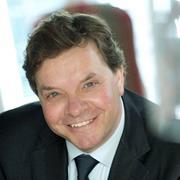
Jan-Willem Toering is director of the Royal Netherlands Chemical Society KNCV.
Respond: redactie@kncv.nl

Every Wednesday in your inbox: the latest chemistry and life sciences news from the Netherlands and Flanders, plus analyses, background stories and more!


No comments yet
Only registered users can post comments on this article.
Log in or register to comment.