






Reaction Disclaimer

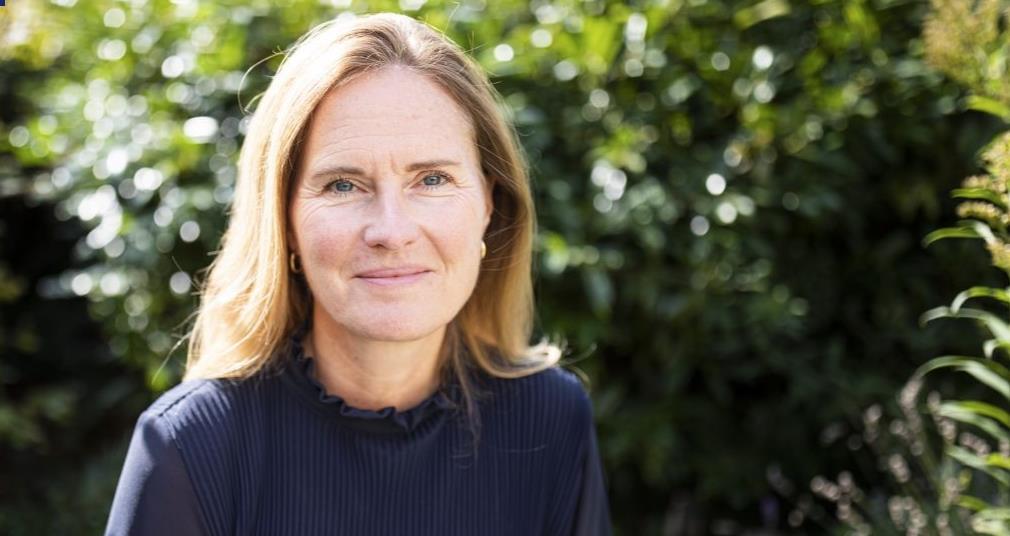
With elections on the horizon, the VNCI (Association of the Dutch Chemical Industry) organised an election debate in January together with the VNPI (Association of the Dutch Petroleum Industry). Special guest Diederik Samsom provided an explanation of the Green Deal, with its key mandate for Europe being a 55% CO2 reduction by 2030 and CO2 neutrality by 2050. Manon Bloemer, director of the VNCI, embraces that ambition. ‘As innovators of the Netherlands, we as a chemical industry want to be frontrunners in sustainable chemistry.
‘As innovators of the Netherlands, we as a chemical industry want to be frontrunners in sustainable chemistry.’
‘The chemical industry is viewed differently now than it was thirty years ago. We now face a very pressing CO2 challenge in which industry plays a key role. The Green Deal is about circularity, about safety, about innovation, and about leading the way in the world. That is also what I find so inspiring about Samsom’s story. He says: we have a plan, a roadmap towards a circular and CO2-free future. It must be inclusive, affordable, and fair. And then the crisis hit. But rather than jettisoning all ambitions to become more sustainable, the opposite now appears to be the case. He calls it “a green deal on steroids”. Some €5.6 billion from a European recovery fund stands ready for Dutch plans to accelerate the transition to sustainability. For Dutch industry, therefore, the opportunities are enormous.’
‘At the VNCI, we believe that chemistry needs a more human face. But we are also realistic — the challenges and issues we are discussing remain highly technical. So how do you connect the two?
What we primarily do is make the innovative projects our members work on every day visible and tangible. I think the recent example of synthetic kerosene is a wonderful illustration of this. Highly innovative and entirely in keeping with today’s ambitions.
What you need above all is a reliable government that sets the rules of the game very clearly and does not keep changing them
Promising initiatives are also being developed in the field of recycling. I expect that in time, products made from recycled materials will become the new standard. That will then become the standard further along the production chain as well. We cannot enforce that, but we can develop the technology, have the innovation ready, and work together with partners to consider how you make the choice for that alternative — the one with a better carbon footprint. How do you make that more attractive?
But we must also be forward-thinking in training the new generation we need to achieve that sustainability transition. The ideal scenario is that we not only maintain employment but can actually see it grow, and that these become interesting jobs. I hope that vocational training colleges are fully aware that sufficient operators, electricians, and installation engineers of the future need to be trained.’
‘All the strategic future plans of chemical companies are focused on sustainability. Together with government and society, we are striving towards a low-carbon and circular economy. We also want to help other sectors to become more sustainable. The investments required to achieve this are enormous. Chemical companies in the Netherlands and across Europe are willing to invest, but not to the point where businesses in Europe go bankrupt and production is relocated to other parts of the world. The preconditions must therefore be in order. The risk of insufficient technological support, infrastructure, and subsidy schemes currently falls on companies, even though they have no control over these factors. We regard that as a major concern.’
‘The government could make clever use of what we call the carrot and the stick. If you strike too hard with a stick, industry will say: “things are being made so difficult for me here in the Netherlands, in Europe — I’m going to take my investments in sustainability elsewhere.” And that is not what you want. What you need above all is a reliable government that sets the rules of the game very clearly and does not keep changing them — a government that offers not only sticks, but above all carrots as well.’
‘The carrot could be the government supporting certain technologies, such as hydrogen, with subsidies. Compare it to the low benefit-in-kind tax rate for electric cars.
One example: you will not achieve a 55% CO2 reduction by 2030 without Carbon Capture and Storage (CCS) — that is, capturing CO2 and storing it in underground depleted gas fields. This is also important for developing a hydrogen economy, which must ultimately replace fossil fuels.
A carrot could be the government supporting CCS and hydrogen by building the infrastructure needed to transport CO2 and hydrogen. As the Netherlands, we are in a superb starting position. We are already strong in hydrogen — let us first make it blue and then green. And we have an enormous port where, over short distances and with relatively modest investment, you can reach depleted gas fields. The opportunities are practically on our doorstep.’
‘I fully understand the controversy surrounding CCS, and industry will ultimately come up with a better solution — at that point it will no longer be CCS but carbon capture and use, CCU, and then the loop is closed. Another important solution for CO2 reduction is electrification via solar, wind, or perhaps tidal power. We still need several decades to make that fully operational — in the sense that those green energy sources are abundantly, cheaply, and reliably available. CCS is a temporary solution that buys us time to develop the other technologies, such as the transition from blue to green hydrogen. A plane recently flew to Madrid on synthetic kerosene. Who knows — perhaps the energy of the future will one day lie stored in old, depleted gas fields.’


Every Wednesday in your inbox: the latest chemistry and life sciences news from the Netherlands and Flanders, plus analyses, background stories and more!


No comments yet
Only registered users can post comments on this article.
Log in or register to comment.