


Reaction Disclaimer

Bio-inks and living materials have been in development for some time, but the results are often not particularly stable or robust. If you want to deploy such materials for any purpose, they need to be strong enough to withstand actual use.
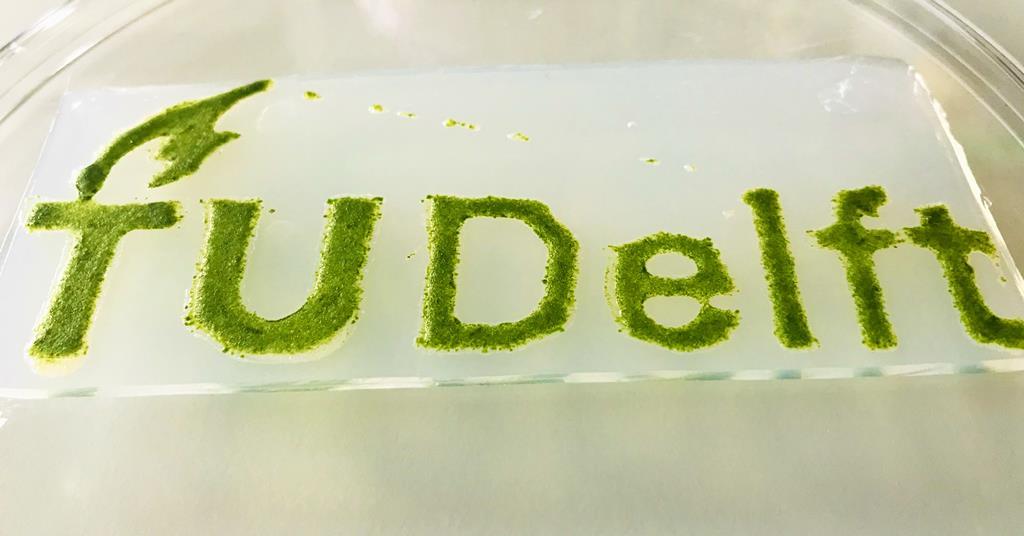
The group of Marie-Eve Aubin-Tam – based at Delft University of Technology – achieved a breakthrough in the field of living materials at the end of April. They used the alga Chlamydomonas reinhardtii, which they mixed into a novel type of hydrogel matrix based on calcium alginate. This mixture could then be extruded using a custom-built 3D printer onto a cellulose surface produced by bacteria.
The living material that results from this process possesses some remarkable properties. Thanks to the algae, it is self-healing, recyclable, and photosynthetic, whilst the bacterial cellulose renders it both flexible and sturdy. That latter quality is particularly noteworthy, as it represents one of the bioprinting challenges the group has managed to overcome.
On a bed of agar supplemented with additional carbon and light (photomixotrophic conditions), the algae within the hydrogel continued to grow for as long as 28 days. If the nutrients are removed, the material remains viable for at least three days, but bringing it back into contact with nutrients extends its lifespan once more.
Should the material become damaged, or simply be no longer needed, the hydrogel can be recycled and the algae cultivated afresh. In this way, such materials could be produced, recycled, and applied anywhere – even in space, the researchers speculate.
The researchers have also succeeded in making the printing process itself considerably more affordable. Whereas earlier bioprinters cost between $5,000 and $250,000, the Delft bioprinter came in at just $250. All materials used are furthermore biodegradable and environmentally friendly.
Among the potential applications cited by Aubin-Tam and colleagues are artificial leaves and photosynthetic bio-clothing. Elvin Karana, one of the researchers, concludes in a press release: ‘What if our everyday products were alive: able to sense, grow, adapt, and ultimately die? This unique collaborative project demonstrates that this question reaches far beyond the realm of speculative design.’
Balasubramanian, S. et al. (2021) Adv. Funct. Mater.


Every Wednesday in your inbox: the latest chemistry and life sciences news from the Netherlands and Flanders, plus analyses, background stories and more!


No comments yet
Only registered users can post comments on this article.
Log in or register to comment.