






Reaction Disclaimer

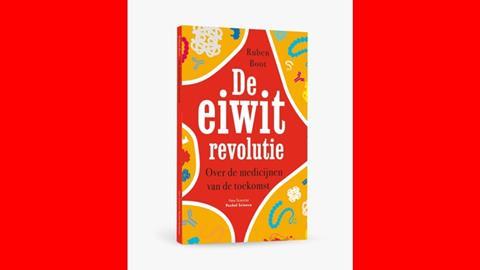
With the current hype around protein-rich shakes and bars, the average person probably associates proteins primarily with food. But on the cover, Ruben Boot — editor at C2W | Mens & Molecule since the beginning of April — makes the point once again: this protein revolution is not about eating, but about the medicines of the future. No fewer than seven of the ten best-selling medicines in the world are made up of proteins. And thanks to the rise of AI, protein-based drugs can be developed faster than ever.
The first forty pages of this compact little book, part of the Pocket Science series, offer a crash course on the role of proteins in the human body. Boot makes liberal use of metaphors throughout — DNA, for instance, is the cell’s cookbook, and genes are its recipes. Proteins, in turn, are the cell’s workhorses. Thanks to this way of visualising things, the theoretical concepts become immediately digestible.
The remainder of the book — equally rich in metaphors — describes the most significant breakthroughs in the development of protein medicines, the success story of university spin-off Genentech, and the potentially limitless possibilities of this type of drug. Boot sheds light on the scientific and technological advances that have driven a genuine revolution in the field: most notably the computing power of modern computers, the repetitive ingenuity of machine learning, and the development of sophisticated analytical equipment. He also explains the challenges associated with this type of medicine — for instance, how to get a protein drug into a cell. ‘Getting the horse into the stable’, as Boot puts it.
Thanks to this way of visualising things, the theoretical concepts become immediately digestible.
The author also highlights the work of various Dutch and Flemish researchers, including bioinformatician Hanka Venselaar of Radboudumc and structural biologist Anastassia Vorobieva of the VIB-VUB Centre for Structural Biology. Venselaar uses visualisation software and AI to investigate how changes in the shape of proteins lead to changes in their function. Vorobieva uses proteins that resemble tiny tunnels to read genetic sequences. By not limiting himself to predominantly American developments, but instead emphasising local expertise, the subject matter becomes far less remote.
After reading this little book, even a non-expert will come away with a clearer picture of protein medicines and how they work — achievable in a single morning or afternoon, without having to rely on Wikipedia or wade through scientific texts. The light-handed way in which De eiwitrevolutie is written means you grasp the theory almost immediately. It is a quality that many a teacher might well envy. Why on earth isn’t Ruben Boot a teacher?
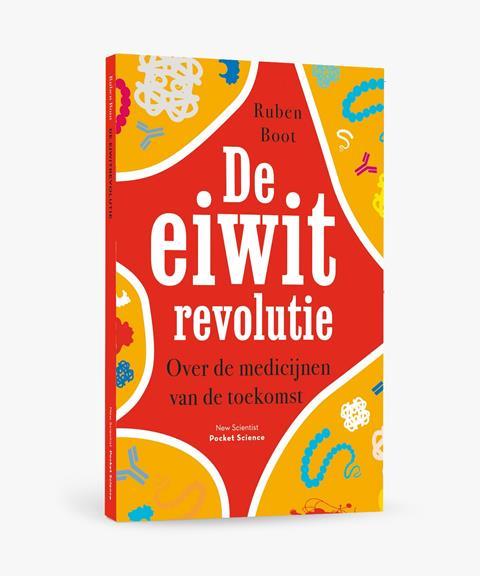
Ruben Boot
from the New Scientist Pocket Science series
Veen Media (2026), 112 pages
available to order via the New Scientist webshop


Every Wednesday in your inbox: the latest chemistry and life sciences news from the Netherlands and Flanders, plus analyses, background stories and more!


No comments yet
Only registered users can post comments on this article.
Log in or register to comment.