


Reaction Disclaimer

You can increasingly find a 0.0 option on menus. Three years ago, around 81.9 million litres of alcohol-free beer were consumed in the Netherlands, with approximately 35 million litres drunk in Belgium in 2023. At the same time, taste remains a significant sticking point. Many consumers miss the character of a regular beer and find alcohol-free varieties too sweet or flat in flavour. Kevin Verstrepen, professor at KU Leuven, explains that there is still plenty of room for improvement in alcohol-free beer, but that alternative yeasts are already coming reasonably close to ‘real beer’.
All of this comes down to the way in which alcohol-free beers are produced to remain below the threshold of 0.05% alcohol by volume. ‘In recent years, brewers have learned to make better alcohol-free beers,’ says Verstrepen. There are two processes for achieving this: a biological one and a physical one.
In the first case, the process begins differently from the outset. The degree of fermentation is minimised. When malt is mixed with warm water, enzymes are released that drive the production of sugars. This process is called mashing, and when carried out at high temperatures, it limits the sugars that can be converted into ethanol. Brewing beer in the ‘conventional’ way falls under the physical method, whereby ethanol is removed afterwards through vacuum rectification and membrane filtration. A drawback of these methods is a diminished sensory experience in the finished beer.
To improve the taste of alcohol-free beers, Scott Lafontaine and colleagues have investigated alternative yeasts that can be used within the biological process, as they describe in ACS Food Science & Technology. These alternative yeasts offer new possibilities for enhancing flavour profiles without producing significant quantities of alcohol. Bioprospecting, hybridisation, and genetic modification are further methods for developing alternative yeasts suited to a flavourful 0.0. Research from the Verstrepen group has already yielded several yeasts under its name, including the NEER yeast, which produces no alcohol at all, thus removing the need to extract it.
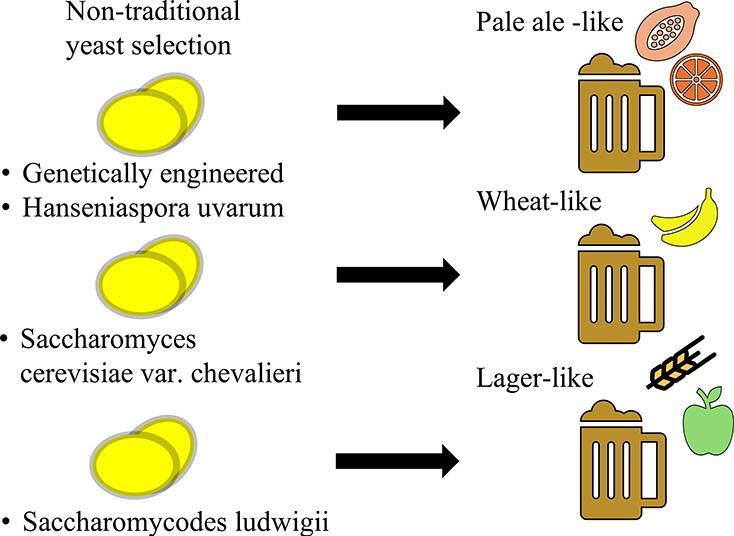
What makes alternative yeasts so useful for alcohol-free beers is that they are unable to ferment the typical sugars such as maltose and maltotriose, but can ferment simple sugars such as glucose and fructose. This gives rise to a beer with yeast-derived flavour and a character of its own. Verstrepen: ‘It is certainly worthwhile to seek out new yeasts, particularly when it comes to different beer styles, as each has its own distinct requirements.’ There is therefore no shortage of demand for new alternative yeasts in alcohol-free brewing.
A number of alternative yeasts are already available on the market, with those derived from hybridisation or genetic modification appearing to most closely resemble traditional yeasts, owing to their greater precision in the fermentation process. In this way, recipes for alcohol-free beers can be established that better meet customer expectations and preferences. ‘Something is still missing,’ says Verstrepen, ‘and that is the alcohol itself. Alcohol contributes a great deal of flavour and aroma, and also influences the behaviour of other aromatic compounds.’ Furthermore, alcohol interacts with mouthfeel and pain receptors. Future research is therefore focused primarily on alternatives to alcohol, with the aim of making alcohol-free beer even better.
Source:
S. Lafontaine, ACS Food Science & Technology (2025), Exploring non-traditional yeast for flavor innovation in non-alcoholic beers.


Every Wednesday in your inbox: the latest chemistry and life sciences news from the Netherlands and Flanders, plus analyses, background stories and more!


No comments yet
Only registered users can post comments on this article.
Log in or register to comment.