




Reaction Disclaimer

‘You may have gained the impression that I am playing down problems. I am not. I identify them and put numbers on them. Concentrations and doses. Of small problems I say they are small, of large ones that they are large. (…) The reason we fuss about glyphosate, PFAS, dioxin, and so forth is that there has been a spectacular, albeit entirely unheralded, measurement revolution, and as a result we can measure absurdly small quantities (nanograms, picograms and femtograms).’
It is good that Simon Rozendaal says, towards the end of Paniek om niets — Hoe de meetrevolutie onze angsten aanwakkert, that he does not wish to play things down. For the book is an extended exercise in contextualising environmental pollution, hazardous substances, toxicological risks and chemophobia. Rozendaal rails against these so systematically that after nine chapters a faint whiff of dismissiveness lingers.
Rozendaal links developments in analytical chemistry to media coverage, the action agendas of environmental organisations, and the repeated tightening of environmental standards. The source of this dynamic lies in the laboratory. Thanks to those wretched mass spectrometers, we are able to measure ever lower concentrations, and this leads, in his view, to unnecessary gloom and panic. Because, he argues, air and water have become far cleaner. Moreover, older classes of persistent substances and pesticides have largely disappeared as a result of successful environmental policy.
‘You read with a smile as he fillets panic-laden reports’
What remains are concerns about, amongst other things, PFAS and the pesticide glyphosate — ‘phantom problems’, according to Rozendaal. Because glyphosate is far less toxic than, say, dioxins and lead, traces of glyphosate are not something we need worry greatly about. He puts nanograms into perspective and uses examples to show how one might take a fresher look at risks: poison does not exist as such, for toxicity lies in the dose.
You read with a smile as he fillets panic-laden reports about the modest correlation between pesticide use and Parkinson’s disease. Rozendaal repeatedly demonstrates that ‘innumerate’ journalists covering this sort of dossier function as credulous ‘conduits of the panic factory’. For instance, when environmental groups detect traces of pesticides in fruit and vegetables, or when actress Carice van Houten has her urine analysed and it turns out to contain 1.08 nanograms of glyphosate per litre.
Yet not everything he puts forward is equally convincing. The claim that oxygen is chemically far more aggressive than PFAS will make your eyes roll, as will the remark that a perceptible smell might tell us something about the risk posed by a substance. Mixture toxicity through the cumulative effect of chemicals receives only the briefest mention: he essentially does not believe in it. The focus is on humans; effects on plants and animals barely feature.
That is not a fatal criticism, for a good book has a clear focus — in this case, the fear of the health risks associated with ‘chemicals’. Besides, the many asides and anecdotes also afford an insight into the author himself and his long journalistic career. Rozendaal is proud, well-read, optimistic, contrary, and at times rather long-winded. It is precisely this blend of personality and chemistry that allows Paniek om niets to provide a persuasive counterweight to the prevailing doom-and-gloom thinking.
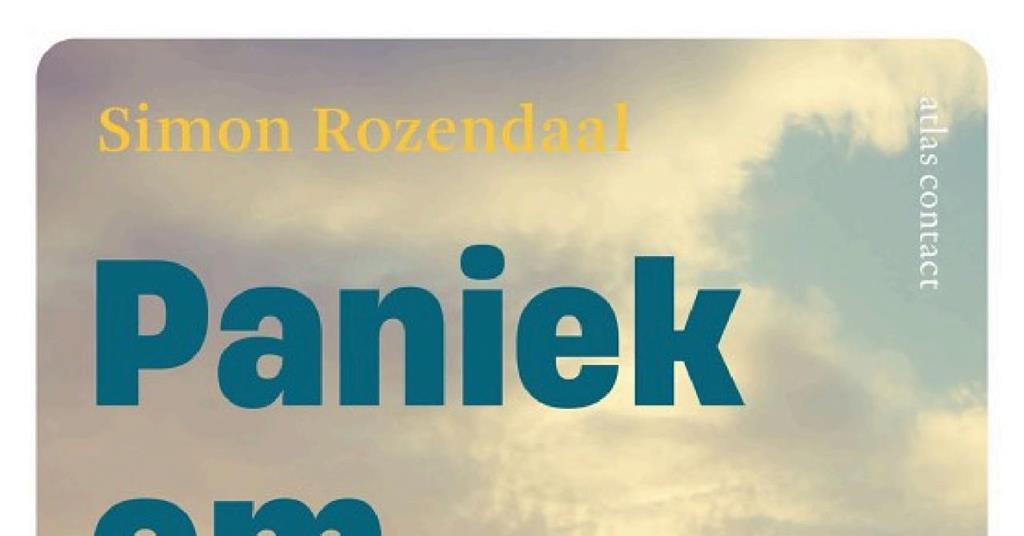
Simon Rozendaal
Atlas Contact (2024) ISBN: 9789045051406; 288 pages


Every Wednesday in your inbox: the latest chemistry and life sciences news from the Netherlands and Flanders, plus analyses, background stories and more!


No comments yet
Only registered users can post comments on this article.
Log in or register to comment.