


Reaction Disclaimer

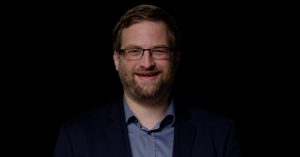
‘Validation of the LC-MS/MS Determination of Analyte X’
‘I completed my training as a chemical-physical analyst at an accelerated pace. Halfway through the second year I transferred to the third year, which meant my graduation placement was also my only placement. I was with the LCMS team at ICON in Assen and had to validate a new method for determining an analyte X. I’m not allowed to say exactly what it was. The analyte was meant to demonstrate the efficacy of a medication for PKU. With that condition, a person is unable to break down phenylalanine. The medication replaces the missing enzyme and breaks phenylalanine down into cinnamic acid, which is then excreted via the urine. The proposed method tested the medication by determining which breakdown product appears in the urine. However, the substance to be detected was rather unstable — within a week, half of it had disappeared. That did not meet the client’s criteria. This year I enrolled in the second year of the HND chemistry programme at Hanze University of Applied Sciences, and I’m looking forward to this new challenge.’
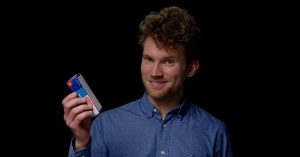
‘Improving the Production Process on the A100-5 to Reduce Rejects’
‘I was studying to become a process operator C, and for my graduation assignment I had to improve a process or product within a company. I did this at Timmerij B.V. and had to improve a side piece and rubber foot for a coffee maker, as that product was failing too frequently. In the end I changed both the product and the manufacturing process. The most satisfying result was that Timmerije actually achieved greater profit on this end product. In addition, the foot is now produced on an electric machine with robotic capabilities. They are vacuum-tested in advance, placed on a conveyor belt, and have virtually no defects. This results in fewer faults and rejects. I genuinely enjoyed every aspect of my project. I am now employed permanently as a setter at my placement company.’
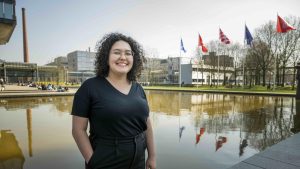
‘From the WWTP to Bio-ethanol’
‘I studied to become a chemical-physical analyst, just like Luka. My graduation assignment was at Recell Group, a company that uses complex waste streams to produce new raw materials or products. I had to produce bio-ethanol from cellulose fibres. It was really more of a degree-level than a vocational assignment, but they thought highly of me and gave me this challenge. In the end I produced bio-ethanol that was 90.81 per cent pure, so it went rather well! When I started I genuinely knew nothing — I had to figure everything out for myself. In the final process I carried out multiple hydrolyses, fermentations, and separation steps. I’m most proud of the fact that I did it entirely on my own. It’s an important piece of research, I feel. At the moment they burn the waste stream, which produces CO2, but it turns out you can also use it to produce a biofuel. I’m now continuing with the HND chemistry programme at Hanze University of Applied Sciences, where I’m enrolling in the second year. I want to learn more about chemistry, face greater challenges, and have more independence.’
The Gouden Vlam is sponsored by the VNCI.


Every Wednesday in your inbox: the latest chemistry and life sciences news from the Netherlands and Flanders, plus analyses, background stories and more!


No comments yet
Only registered users can post comments on this article.
Log in or register to comment.