



Reaction Disclaimer

Linthorst examines the rise of ‘green chemistry’ as a discipline in the US, the UK and the Netherlands — a field that continues to grow in topicality and relevance. The subject therefore feels very familiar, and a great many readers will recognise from their own experience the developments, individuals, institutions, initiatives, journals and debates that Linthorst describes. Not least because he has delved extensively into the archives of the KNCV. For those who have been working professionally within (policy-oriented) chemistry for some time, terms such as DTO-Chemie (Sustainable Technological Development), NOTA (Netherlands Organisation for Technology Assessment) and DCO (Foundation for Sustainable Chemistry Development) are sure to ring a bell. Prominent KNCV figures such as former chairmen Herman van Bekkum and Jan Mulderink also make an appearance.
It is not often that a thesis in the history of chemistry feels so close to home. That makes for an enjoyable reading experience, though it must be said that it simultaneously demands a degree of perseverance from the reader. Linthorst presents an impressive body of literature research that requires careful attention. A great many names, reports and theories are placed before you, combined with technical terminology from the sociology and philosophy of science. What Linthorst demonstrates is that the emergence of ‘green chemistry’ — which in the Netherlands gained traction primarily under the banner of ‘sustainable chemistry’ — had very different origins in different countries. In the US, it was chiefly researchers at the Environmental Protection Agency who were the driving forces behind the formation of this new discipline, with the social imperative to reduce polluting waste streams serving as the principal motivation. In the UK, it was the deteriorating public image of chemistry and the chemical industry that drove the pursuit of ‘green chemistry’.
‘Prominent KNCV figures such as Herman van Bekkum and Jan Mulderink also make an appearance’
In the Netherlands, it appears to have been more a combination of the two, with the search for renewable sources and raw materials serving in particular as the guiding principle. Everywhere, opportunism raised its head over time. Many scientists were not averse to applying a ‘green’ veneer to their work — or to the way it was described — if doing so would help secure funding. It is precisely for this reason, as Linthorst explains in the impact section, that it is important to understand the background and formative history of such a new discipline. If science wishes to be accepted by the public as a worthwhile and reliable use of public money, the underlying motivations behind the research must always be unambiguously clear.
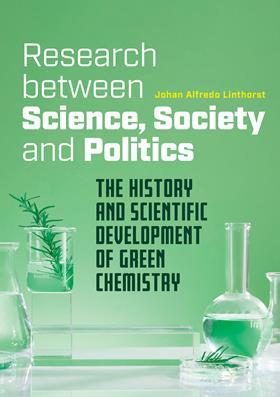
Johan Alfredo Linthorst
Uitgeverij Eburon (2023), 269 pages, €36,-


Every Wednesday in your inbox: the latest chemistry and life sciences news from the Netherlands and Flanders, plus analyses, background stories and more!


No comments yet
Only registered users can post comments on this article.
Log in or register to comment.