



Reaction Disclaimer

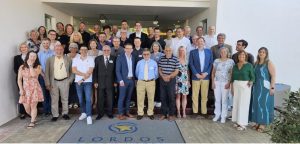
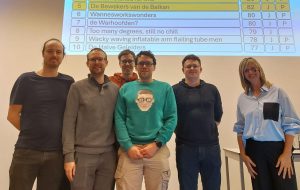
The team, comprising Sander Cleeren, Jef Dierckx, Liesl Geebelen, Maud Goris, Natalie Neyrinck and Aleksandra Slusarczyk, organised the study trip within the context of the elective module ‘Organising a study trip to the chemical sector’. The locations visited were situated in the Netherlands and Germany. The organisers also made a point of including not only the traditional chemical industry, but also chemistry within the life sciences.
On the morning of Tuesday 19 March, all the students boarded the coach with bags packed and ready for the first stop: Chemelot in the Netherlands. Following a briefing on the research activities at this industrial campus, they were offered a guided bus tour to gain an impression of everything that is produced there. In the afternoon, the students enjoyed a lunch provided by Chemelot, before travelling on to Frankfurt later that afternoon. Situated in the heart of the city, close to Frankfurt’s historic centre, the youth hostel ‘Haus der Jugend’ served as the base for the next three days.
Precious metals
The following day, the students departed for Hanau to visit the chemicals company Umicore. This site focuses on the production of precious metals, such as palladium and platinum, which are used in industrial catalysts or in passenger vehicles. The group was given the opportunity to look around the testing centre for cars fitted with new catalytic converters. After lunch at Umicore, everyone was able to head back to the youth hostel to enjoy some sunshine. The students could then explore Frankfurt city centre.
On Thursday, everyone set off for Darmstadt to visit the industrial site of Merck, one of the oldest chemical conglomerates, specialising in pharmaceutical and specialty materials. During the visit, the students were taken on a tour of the site and were able to observe various production activities. There was also a presentation on the development history of one of Merck’s new cancer drugs. It was a fascinating story in which molecular models, synthesis strategies and extensive testing went hand in hand to ultimately arrive at the most effective version.
The final day was reserved for a visit to BASF Ludwigshafen. This is an enormous chemical site where every conceivable basic product is synthesised, with the end product of one plant serving as the starting material for the next. The efficiency with which energy and materials are managed is truly impressive. After midday, it was time to begin the return journey to Hasselt and to reflect on everything everyone had learnt and discovered about chemists and their work.

Every Wednesday in your inbox: the latest chemistry and life sciences news from the Netherlands and Flanders, plus analyses, background stories and more!


No comments yet
Only registered users can post comments on this article.
Log in or register to comment.