



Reaction Disclaimer


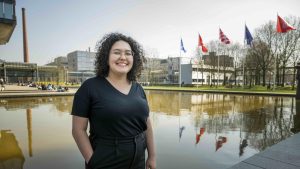
PhD chemist, Vrije Universiteit Brussel. Now: Plating Team Coach at materials manufacturer Omniseal Solutions
What does your job involve?
‘Our company is a market leader in designing and manufacturing seals for specific applications, such as aerospace and nuclear energy. A number of those seals need to be fitted with a thin coating layer. I am responsible for this so-called plating process. This involves ensuring that the electroplating baths in which the plating is carried out are chemically sound and that production can keep running. I also carry out R&D work to bring about production improvements.’
Why did you choose this job?
‘After doing research at university for so long, I was drawn to working in a production environment. I also found the content of the job, centred around electroplating and electrochemistry, very interesting. During my studies I learnt the theoretical side of it, but now I’m getting to grips with the practical side.’
Was it a big adjustment at first?
‘Absolutely — the step from academia to a production company is enormous. Everything is geared towards manufacturing as efficiently as possible. And there’s a certain pressure, of course, because you don’t want a product to be delivered late. But I see those as wonderful challenges.’
What does the future hold?
‘At the moment I’m happy with what I’m doing. I still have a great deal to learn, so that’s what I’ll be focusing on over the coming years.’
Do you have any tips for graduating students looking for work?
‘Above all, don’t be afraid to try something to see whether it suits you. You can always change course, but you’ll never know if you don’t give it a go.’

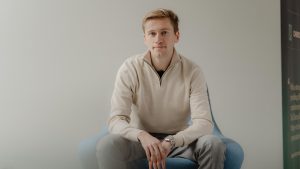
Professional bachelor’s in chemistry, AP University of Applied Sciences Antwerp. Now: Process Operator at chemical company BASF
What does your job involve?
‘As a process operator, my job is to carry out checks on the production process together with colleagues. Is anything leaking? Are any pumps cavitating? Keeping maintenance work on track and assisting with measurements also falls within my remit. And occasionally I sit in the control room, monitoring everything via computers to make sure all is running smoothly. Quite varied work, all in all.’
Why did you choose this job?
‘I did my six-month placement at BASF as well, and that went very well. Afterwards I was offered a contract and could start straight away.’
Was it a big adjustment at first?
‘Certainly — a working environment is quite different from a school environment. But what took the most getting used to were the rapidly rotating shift patterns. Sometimes you’re on early, sometimes late, and occasionally nights as well. But you do get used to it fairly quickly.’
What does the future hold?
‘I feel very much at home here at BASF. I genuinely wouldn’t want to be anywhere else right now. At some point there may well be an opportunity to progress into a team leader role.’
Do you have any tips for graduating students looking for work?
‘Above all, find something you genuinely enjoy. Something where going to work feels like a privilege rather than an obligation, so to speak. Otherwise the days become very long indeed.’


Every Wednesday in your inbox: the latest chemistry and life sciences news from the Netherlands and Flanders, plus analyses, background stories and more!


No comments yet
Only registered users can post comments on this article.
Log in or register to comment.