





Reaction Disclaimer

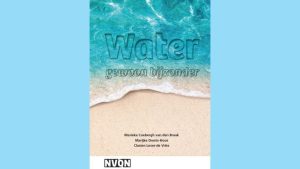
From carbon chemistry to redox, the latest edition of Show deChemie from the NVON series has something to offer for every topic and every year group. The authors have sorted the instructions — which sometimes also lend themselves perfectly to a practical lesson — by topic within the secondary school chemistry curriculum. For each ‘recipe’, all the necessary information (such as duration and materials) is visible at a glance. But the book is more than a demonstration cookbook. ShowdeChemie contains a handy extra feature: some instructions include tips on how to link the demonstration to citizenship education. That comes in very useful now that every school must be able to demonstrate how it weaves ‘citizenship’ into its curriculum. In this way, a chemistry teacher can easily make a contribution using this book.
Socratic dialogue
Although more experienced chemistry teachers will likely already be familiar with some of the experiments, this book is useful for them too. The background to each demonstration is described in detail, so that as a teacher you know exactly what the class is looking at. In addition, each experiment includes tips for a Socratic dialogue with pupils about what they have observed. One difference from older editions in this series is that the authors now use only chemicals that are permitted in chemistry lessons. Moreover, the materials used are ones that schools are likely to already have in their cupboards. High-tech equipment such as a gas chromatograph is not required.
Roughly an eighth of the book is devoted to an explanation of demonstrations, general safety, and teaching. The authors could have omitted this lengthy introduction. The same applies to certain remarks with a rather preachy tone, such as: ‘During demonstrations at open days, a teacher can sometimes be tempted to go for the effect and turn a blind eye to safety.’ One point of criticism is that the text is unnecessarily complex in places, as in: ‘With regard to making learning objectives explicit at lesson level, the textbook tends to offer little support.’
Astonish
The well-intentioned didactic tips included are often stating the obvious for experienced teachers, and for less experienced teachers there is simply too much information when all you want to know is what to look out for in order to deliver a good demonstration. A few brief tips or rules of thumb for a successful demonstration would have sufficed here. But those opening introductory pages are easy enough to skip. All in all, it is an inspiring book that will make any teacher eager to astonish their pupils and teach them something new through a compelling demonstration.
Photos of Thunder Under Water


Every Wednesday in your inbox: the latest chemistry and life sciences news from the Netherlands and Flanders, plus analyses, background stories and more!


No comments yet
Only registered users can post comments on this article.
Log in or register to comment.