



Reaction Disclaimer

In a small room on the High Tech Campus in Eindhoven stands a prototype separation machine. The machine has one inlet and two outlets. It draws in outside air, and the two outlets differ on one essential point: the concentration of carbon dioxide.
The machine is an invention by Carbyon, a start-up that wants to extract CO2 from the air. At the heart of the invention is a sorbent capable of binding CO2. They expose it to air, then close the valves and heat the material, causing CO2 to be released and the concentration in the outlet to increase. If you can carry out this adsorption and desorption step within a few seconds, you can efficiently process large volumes of air over the course of a year. Carbyon is aiming for an outlet with 60 to 70% CO2. That level of purity is perfectly achievable with their technology; a higher purity would be too costly and can be attained using existing techniques. Ultimately, they want to build thousands of such machines.
The company was founded four years ago by CEO Hans de Neve. At the time, he was working at TNO on materials for solar panels, but also had a budget for Friday afternoon experiments. It was there that he had the idea of using the materials he was working with for direct air capture. The initial experiments were promising enough for him to leave TNO and found Carbyon. In the end, the original material proved unsuitable after all; it has since been replaced by a well-functioning alternative: highly porous, functionalised activated carbon. Carbyon is not willing to disclose any further details at this stage.
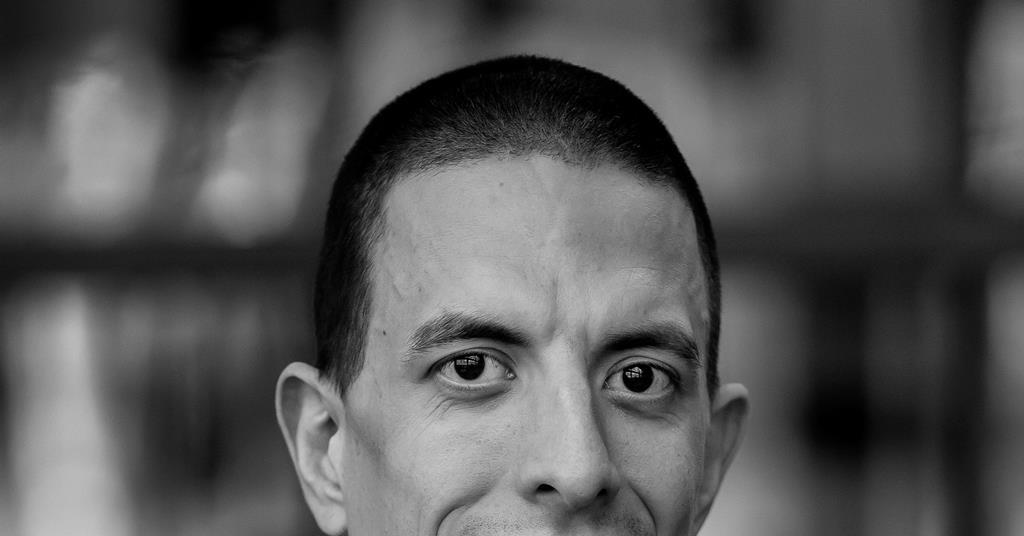
‘If you look at the targets set by the climate agreement, we need to move towards carbon negativity,’ says Arno van Hoof, who at Carbyon is responsible for developing the chemical sorbent. After completing his doctorate at Eindhoven University of Technology, he joined the analytical department at Shell. Working at Carbyon is the complete opposite. ‘I can learn a great deal personally here, and the goal really appeals to me. I want to leave the planet in good shape for the next generation. We face an enormous challenge, and here I can contribute more than I ever could at Shell.’
According to Van Hoof, there are four applications for which they can sell their machines: greenhouse horticulture, underground CO2 storage, solar fuels, and the sequestration of CO2 in materials. ‘Glasshouses currently burn natural gas to increase the CO2 concentration inside so that plants grow more quickly. That could be replaced by one of our machines.’ When it comes to storage in materials, he is thinking of cement and concrete production. He expects glasshouses and storage in concrete to be the first to bring in customers. ‘In both cases, the CO2 does not need to be ultra-pure. For catalysis, to produce solar fuels, you do need that.’
When Van Hoof started two years ago, the search for the right material was still in full swing. ‘It was a matter of not giving up, reading papers, and trying a great deal.’ Recently, a first prototype has been built that draws in outside air and emits gas with a higher concentration of CO2. Because they do not know exactly what is in the inlet stream, they can test how the machine performs in a realistic environment. They are now dependent on the weather, and humidity in particular fluctuates enormously. They also want to estimate the costs per quantity of CO2 processed. ‘The aim of this prototype is to arrive at a good estimate of the energy budget. Ultimately, we want to move towards sustainable sources such as wind and solar.’
‘Everyone here is primarily driven by the desire to combat climate change.’
Van Hoof emphasises that Carbyon’s primary aim is not to make as much money as possible. ‘To be sustainable as a company, you ultimately need to be able to turn a profit, but everyone here is primarily driven by the desire to combat climate change, and that’s a good feeling. Our company will be a success when the towers are standing in the field and we are carbon-negative as a business.’ When Van Hoof joined there was one test rig; now there are four with a fifth in the pipeline, and they have grown from 10 to 30 employees. ‘It’s really exciting to be part of that growth.’
Carbyon has raised €8 million in investment to date, including from InvestNL and the Brabantse Ondernemingsmaatschappij. A further $1 million came from Elon Musk’s XPRIZE Milestone, a competition for projects that contribute to removing CO2 from the atmosphere. ‘A great deal of documentation was required for that, and we worked hard for it. Having it recognised was a wonderful moment. It’s a confirmation that we’re on the right track.’


Every Wednesday in your inbox: the latest chemistry and life sciences news from the Netherlands and Flanders, plus analyses, background stories and more!


No comments yet
Only registered users can post comments on this article.
Log in or register to comment.