


Reaction Disclaimer

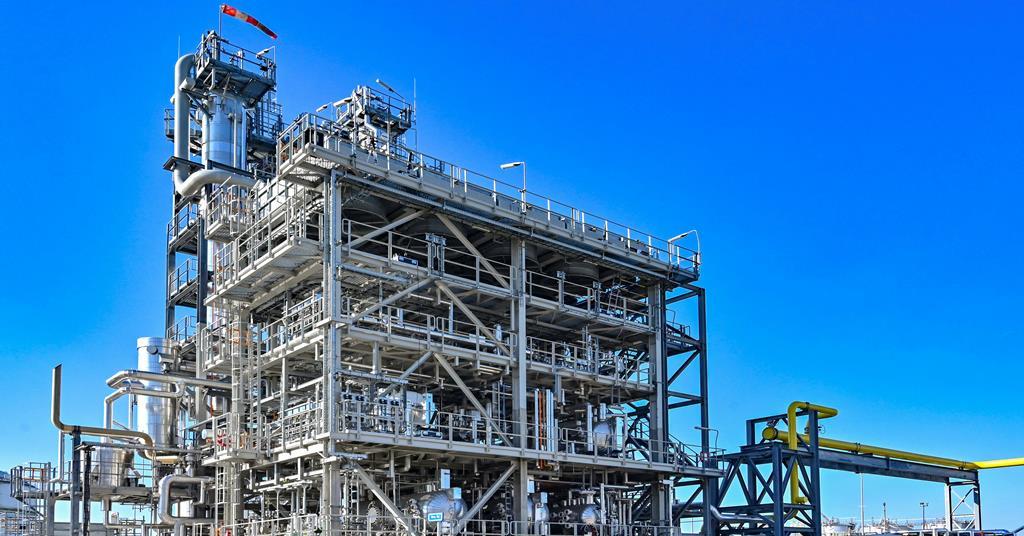
At the end of 2024, Shell commissioned a new installation at Moerdijk, enabling it to make pyrolysis oil suitable for blending into its own crackers. This pyrolysis oil upgrader serves primarily as a showcase for the chemical recycling of plastics. Compared with Shell Moerdijk’s capacity of 4.5 million tonnes of product per year, the 50 kilotonnes of the new upgrader is indeed not that much, says Paul de Hoog, business opportunity manager at Shell. ‘But to achieve this, 100 kilotonnes of plastic waste has been processed. That is still 15 per cent of the total amount of plastic waste currently being incinerated in the Netherlands each year.’
De Hoog also refers to the installation as a market development unit. ‘We are offering pyrolysis companies the opportunity to sell their oil. There are currently many different parties active in the field of plastic pyrolysis. A large proportion of these are start-ups. They need a viable business case to advance their development. It is therefore a major advantage to be able to say that a company like Shell is purchasing your product. We have now concluded offtake contracts with ten different companies, all of which are at different stages of development and apply different pyrolysis technologies.’
‘The specifications of the oil we can process in the upgrader are very broad’
Paul de Hoog, Shell
Pryme has been supplying the first pyrolysis oil from its factory in Rotterdam since last summer. Another stream of feedstocks comes from Borealis subsidiary Renasci in Ostend, which produces pyrolysis oil using a process developed by BlueAlp, a technology developer based in Eindhoven. This patented slow cracking technology will also be applied by Italian waste processor Recupero Etico Sostenible (RES), with which Shell recently concluded an agreement to purchase the entire pyrolysis oil production output of approximately 15 kilotonnes per year.
Shell receives a broad spectrum of feedstocks from all these different suppliers. De Hoog: ‘The specifications of the oil we can process in the upgrader are very broad. We focus on pyrolysis oil that uses PE and PP from food and pharmaceutical packaging as its feedstock.’ The quality of pyrolysis oil is directly traceable to the purity of the plastic waste stream, explains Marvin Kusenberg, postdoctoral researcher at the Laboratory for Chemical Technology at Ghent University. He focuses specifically on the pyrolysis of plastic (packaging) waste and the steam cracking of pyrolysis oil. One of the most important research themes is the effect of contaminants in pyrolysis oil and how these can be removed. Even once the ‘adhering dirt’ from the plastic waste has been removed, the current pyrolysis oil is in any case not pure enough to be used directly in a cracker, says Kusenberg. ‘When plastic is pyrolysed, a highly viscous product is formed, which is called oil but more closely resembles a wax. In many cases it cannot even be pumped. A cracker cannot process fractions with a boiling point above 350 °C.’
Moreover, there are various components that one wishes to avoid in the cracking process. ‘Unsaturated hydrocarbons are highly reactive and can form oligomers. Some pyrolysis oil consists of up to eighty per cent olefins, which is highly undesirable in cracker feedstock. At higher percentages, too many oligomers are formed, leading to increased fouling and coking,’ explains Kusenberg. Olefins can be readily saturated by hydrogenation. ‘Hydrotreatment was already being applied to improve the quality of bio-oil. This can be a useful solution if an industrial site has sufficient hydrogen available.’
‘When plastic is pyrolysed, a highly viscous product is formed that more closely resembles a wax’
Marvin Kusenberg, UGent
Heteroatoms in pyrolysis oil also present a problem. Chlorine in particular is a notorious contaminant. Pigments, especially green ones, contain chlorides, notes De Hoog. And it is present in PVC, which remains in the packaging waste stream, adds Kusenberg. ‘Chlorine in plastic waste can, under certain conditions, form HCl, a highly corrosive substance that can damage installations.’ Oxygen and nitrogen are also unwanted atoms. Kusenberg: ‘Oxygen comes from PET, for example, despite the fact that this can be effectively separated from other plastics using current methods. If PET remains, acid formation and corrosion are again the problem. Nitrogen is found in polyurethane or polyamides, amongst others. This can remain in the plastic waste stream due to incorrect separation or the presence of multilayer packaging.’
[continued below the photograph]
These compounds can form gum-like substances that cause fouling of the cracker, leading to downstream problems within the cracker and necessitating more frequent maintenance. De Hoog also cites the presence of metal particles and other elements such as silica as unwelcome. ‘Plastics often contain additives to give them certain properties; in addition to colorants, these include, for example, stabilisers or plasticisers.’
The contaminants can also cause pyrolysis oil to have a shorter shelf life, explains Kusenberg. ‘Low-quality oil is less stable. Impurities can trigger reactions, leading to the formation of agglomerates and gummy substances. Within a matter of weeks, the oil can degrade as a result. A stabiliser is therefore often added to maintain quality until the oil is used.’
Shell applies liquid extraction with nitrogen-based solvents in its upgrader to remove the contaminants. Liquid extraction is normally well-established as a purification process, says De Hoog. ‘But pyrolysis oil has a different polarity due to the presence of oxygen and nitrogen. This makes the process more difficult to control — for example during solvent recovery.’ Both Kusenberg and De Hoog expect new technology to improve the quality of pyrolysis oil. De Hoog: ‘At the moment, plastic pyrolysis is still very much in its infancy.’
‘Food packaging has a short lifecycle, and that is precisely why recycling is so urgent here’
Marvin Kusenberg, UGent
Industry and university groups are working on various techniques to improve the chemical recycling of PE and PP, for example through catalytic pyrolysis. However, the quality of the waste must be very good in that case, as contaminants deactivate the catalyst. The additional pre-treatment means the product becomes more expensive. The question then arises as to whether pyrolysing it is economically attractive at all. What certainly does not help in this regard is that the market for plastic recycling, both mechanical and chemical, is currently highly uncertain. In the Netherlands, eleven companies have already fallen victim to, amongst other things, the increase in cheap supply from Asia and the United States.
According to Kusenberg, there is sufficient potential demand for circular plastics. ‘Food and pharmaceutical packaging, for example, has a short lifecycle, and that is precisely why recycling is so urgent here.’ He believes a financial incentive is necessary to make pyrolysis oil competitive with fossil oil. ‘Pyrolysis consumes a great deal of energy, and making pyrolysis oil suitable for use in a cracker requires various upgrading steps. This demands a considerable investment from companies, making the product more expensive. Can companies be compensated for this? Or is it possible to introduce a negative price incentive for fossil plastics? That is an ongoing political debate.’ De Hoog adds: ‘There is still too much uncertainty in legislation. A blending obligation, similar to that for fuels, would provide the right market incentive.’
‘There is still too much uncertainty in legislation’
Paul de Hoog, Shell
Plans to that effect do exist, but how these will materialise remains unclear. Under the proposed National Circular Plastics Standard (NCPN), Dutch plastics processors would be obliged from 2027 onwards to blend a minimum proportion of recycled and/or biobased plastic into products for the Dutch market. By comparison, a blending obligation in Belgium will not come into force until 2030. Various Dutch industry associations were therefore unhappy with the design of the new standard. For instance, it did not apply to foreign companies, and the proposed certification system was administratively highly complex. The planned plastics levy also met with resistance from the industry. This would specifically fall on waste processors, risking making recycling more expensive than producing new plastics.
The Dutch cabinet recently decided that the plastics standard and levy will not proceed in their current form. ‘A better alternative is being sought,’ said [by now a caretaker, eds.] Minister Sophie Hermans of Climate and Green Growth. Industry associations are advocating that the standard be placed on major retail brands and distribution centres in order to steer demand. They also propose starting with a minimum blending obligation of, for example, 3 per cent recyclate and increasing this annually towards 2030, when the European blending obligation comes into force.


Every Wednesday in your inbox: the latest chemistry and life sciences news from the Netherlands and Flanders, plus analyses, background stories and more!


No comments yet
Only registered users can post comments on this article.
Log in or register to comment.